

DBT Skills

Dialectical Behaviour Therapy is one of the most effective treatments for borderline personality disorder. It was developed by Dr Marsha Linehan and focuses on practical skills that help people manage emotions, cope with stress and build healthier relationships.
DBT isn't about "fixing" you, it’s about giving you tools to make life feel more manageable. These skills can be practised by anyone whether you’re living with BPD or simply wanting to handle emotions better.
Disclaimer: The DBT skills described here are adapted from Dialectical Behavioural Therapy developed by Dr Marsha Linehan. This content is for educational purposes only and is not suitable for professional, medical or therapeutic advice. If you are struggling please reach out to a qualified mental health professional.


The Four Core Areas of DBT

Mindfulness- Learning to stay present and aware in the moment.
Distress Tolerance- Surviving crises without making things worse.
Emotion Regulation- Understanding and managing intense emotions.
Interpersonal Effectiveness- Building healthy, balanced relationships.

Mindfulness
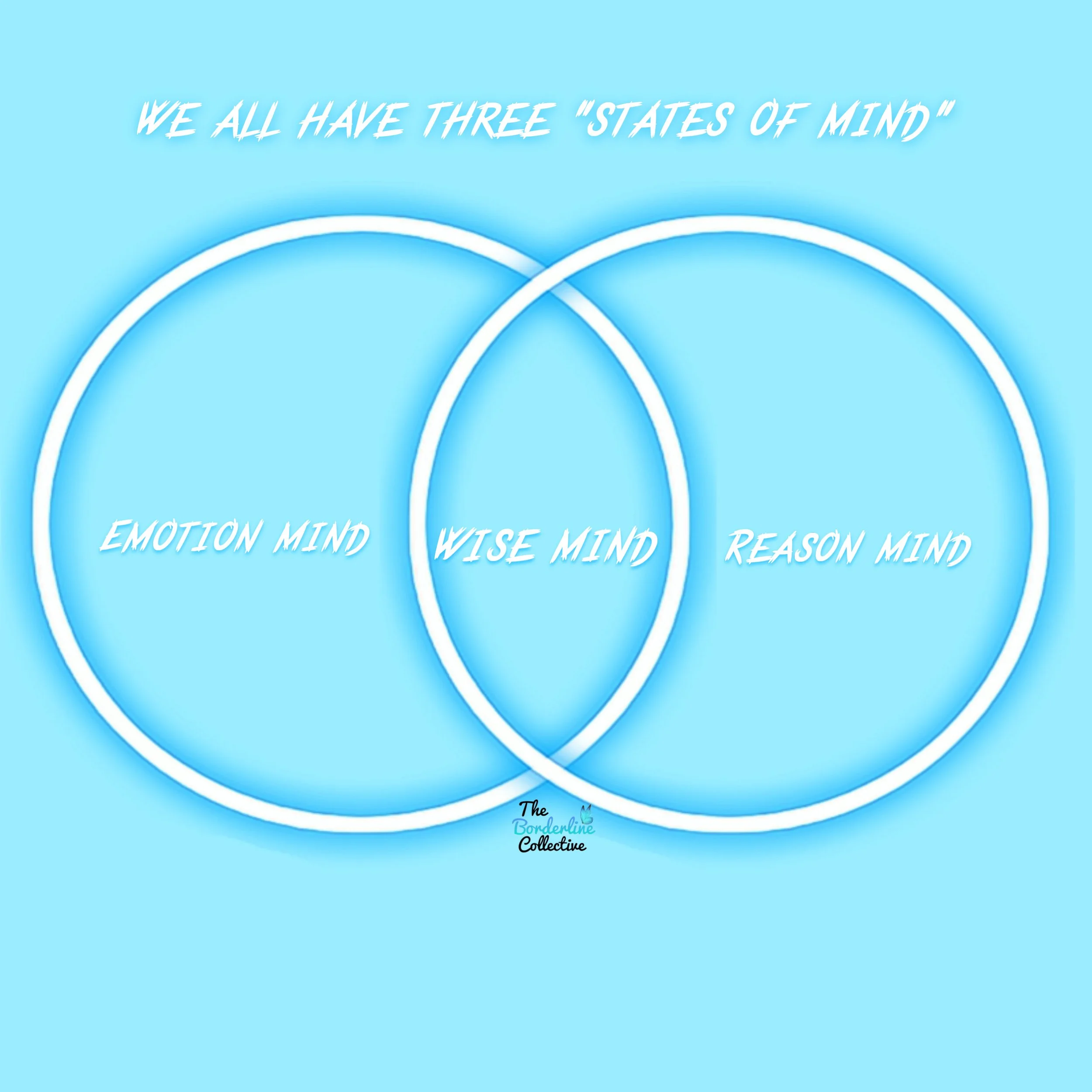
Emotion Mind- When our feelings take over (e.g. "Im furious, I have to act right now")
Reason Mind- When we focus on only facts, logic and problem-solving, (e.g. "Statistically, The risk is low, So I shouldn't be upset")
Wise Mind- The balance of both Reason & Emotion mind. Wise mind is the inner voice or calm place where emotion and reason work together.
Wise Mind helps you make decisions that respect your feelings while also considering facts.
Example:
Emotion Mind says "Text them right now or i'll explode".
Reasonable Mind says "Ignore it. Its not logical to care".
Wise Mind says "I feel hurt and want connection. I’ll wait an hour, calm down then send a thoughtful message".
How to Practice Wise Mind
Pause and ask "What would my wise mind say right now?"
Try mindful breathing to quiet your thoughts and emotions.
Visualise a calm, balanced version of yourself giving you advice
Distress Tolerance
Life brings painful moments that are hard to avoid. Distress tolerance skills help you ride the wave of emotion without resorting to harmful behaviours.
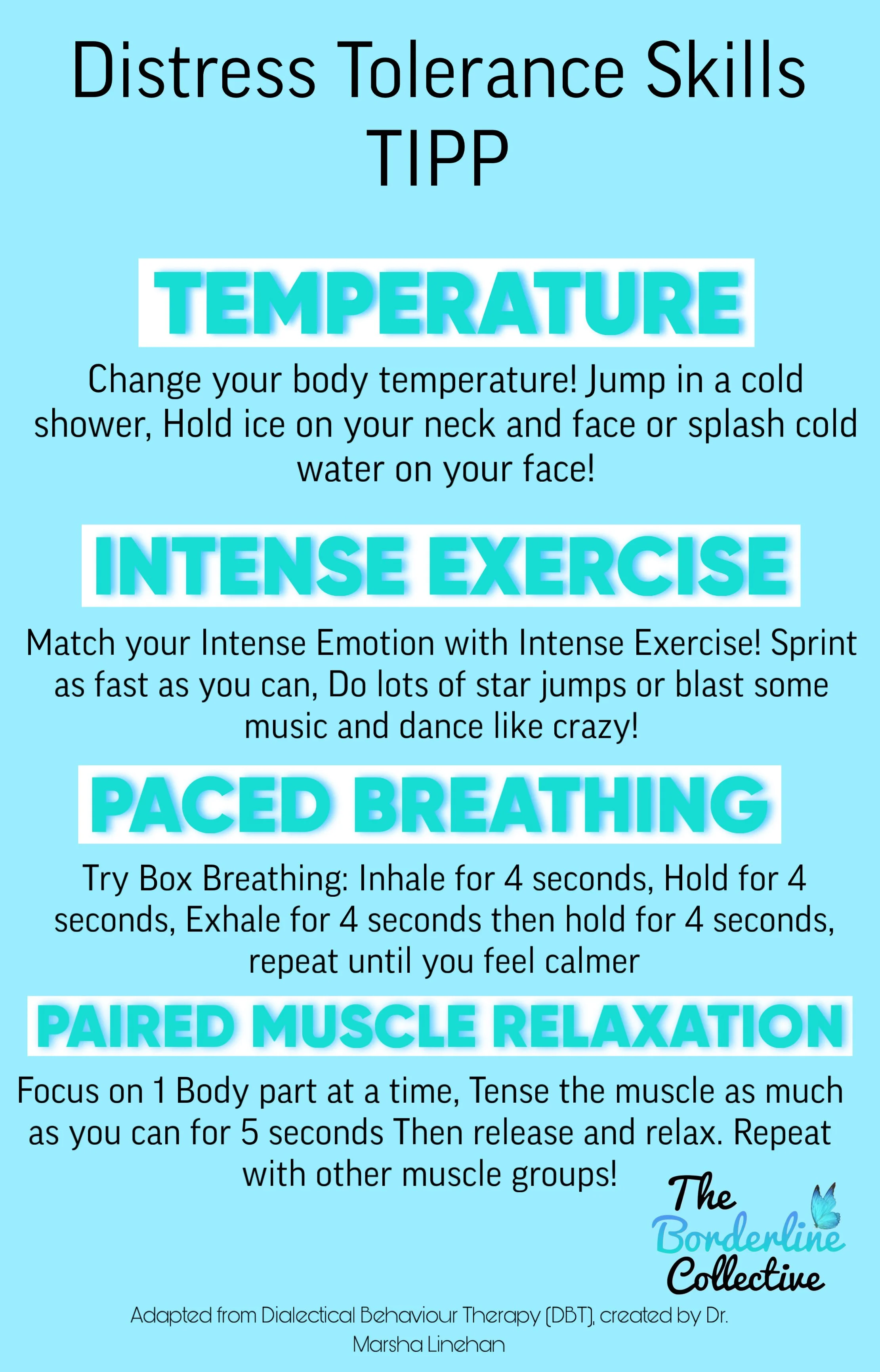
When emotions are intense, your body is in overdrive. The TIPP skills can help calm your nervous system. Fast small changes in your body. Can shift your whole state of mind.
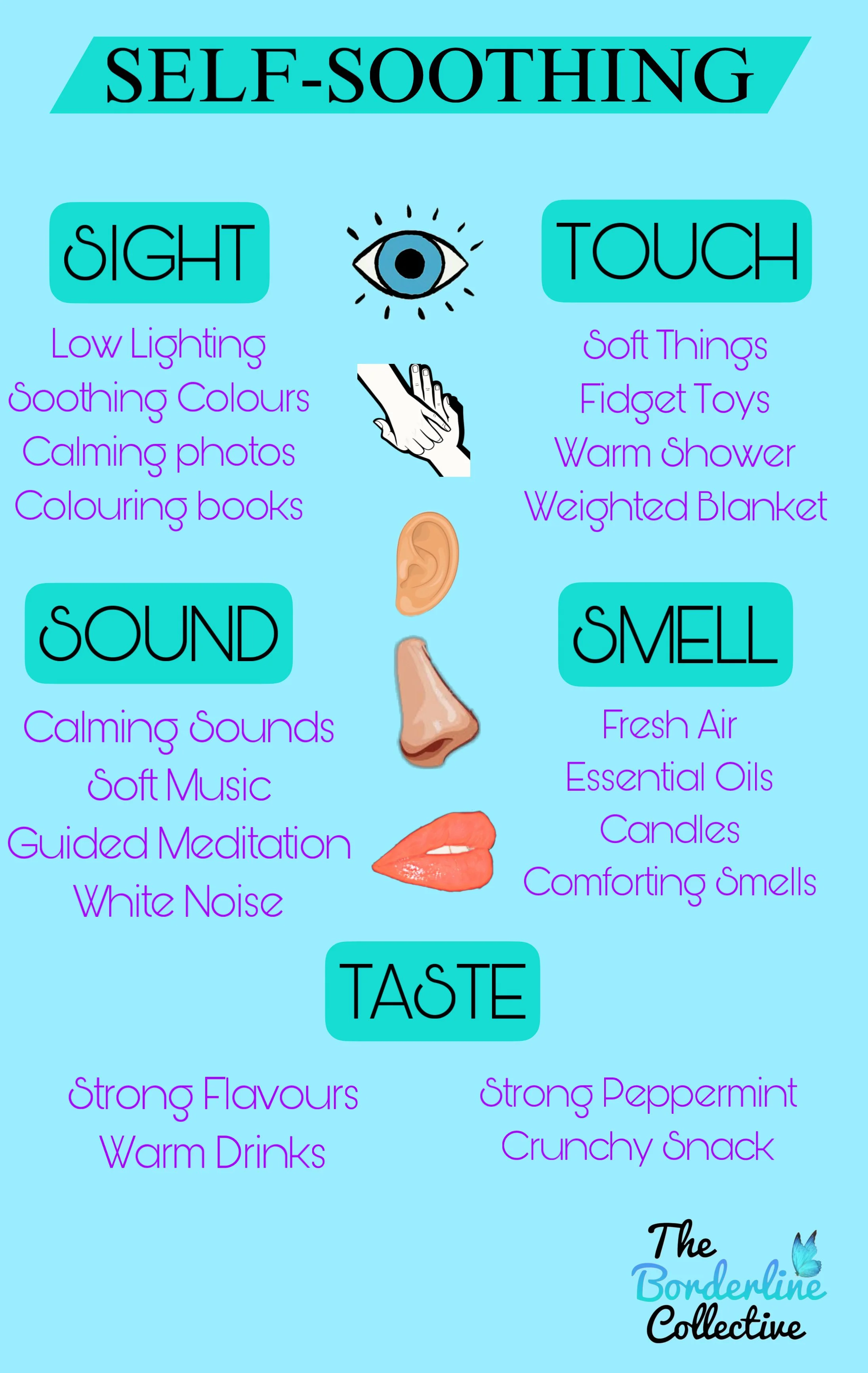
When everything feels too much return to your senses. The DBT self-soothing skill is about reminding your body and mind that you are safe in this moment.

Emotion Regulation
Strong emotions are a core part of BPD these skills help you understand and manage them instead of feeling controlled by them.
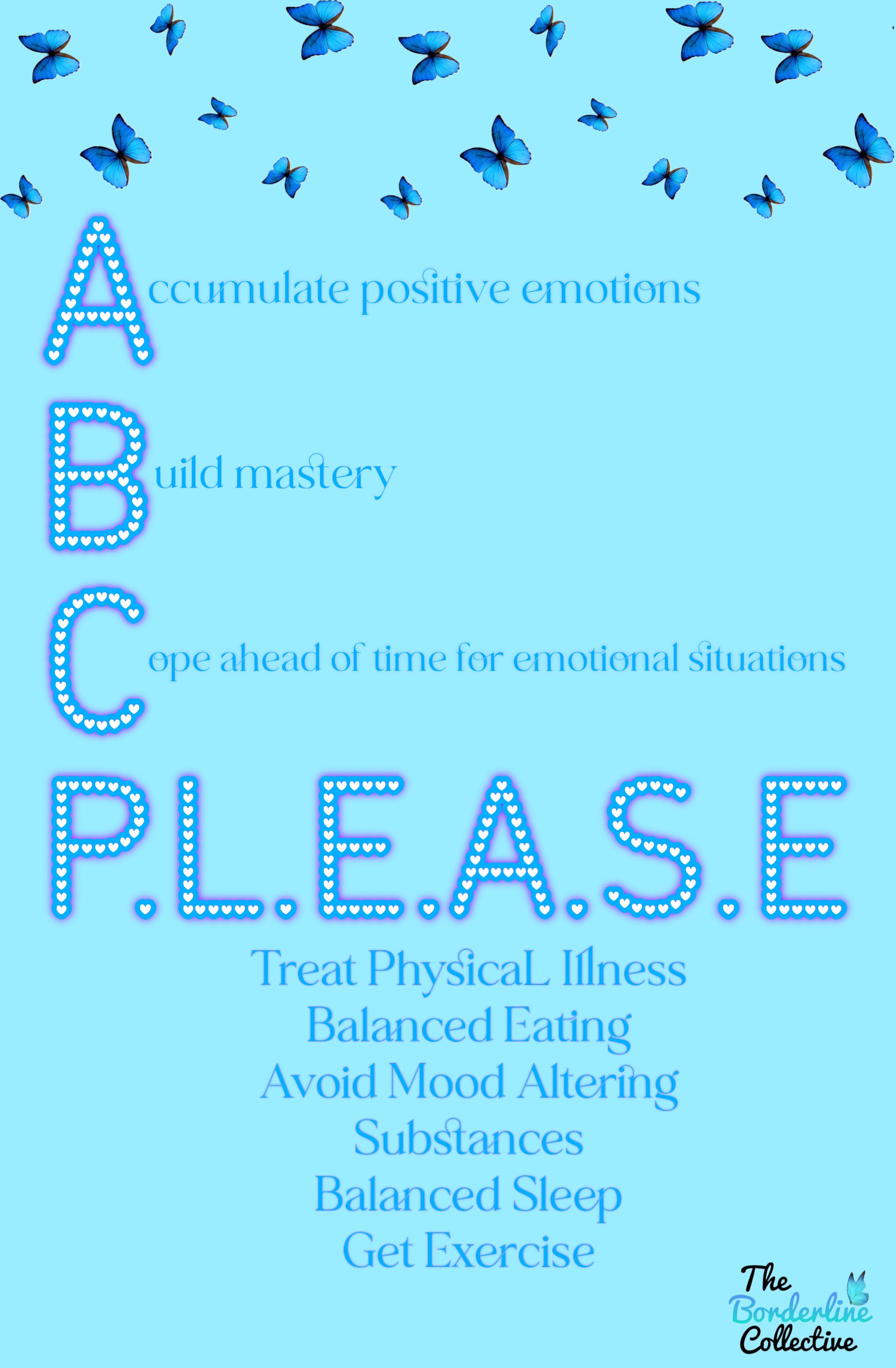
The ABC PLEASE skill reduces vulnerability to emotion storms by taking care of your body and mind.
Interpersonal Effectiveness
Relationships can feel like one of the hardest parts of BPD. These skills teach us how to ask for something, when you need to say no and how to keep relationships healthy
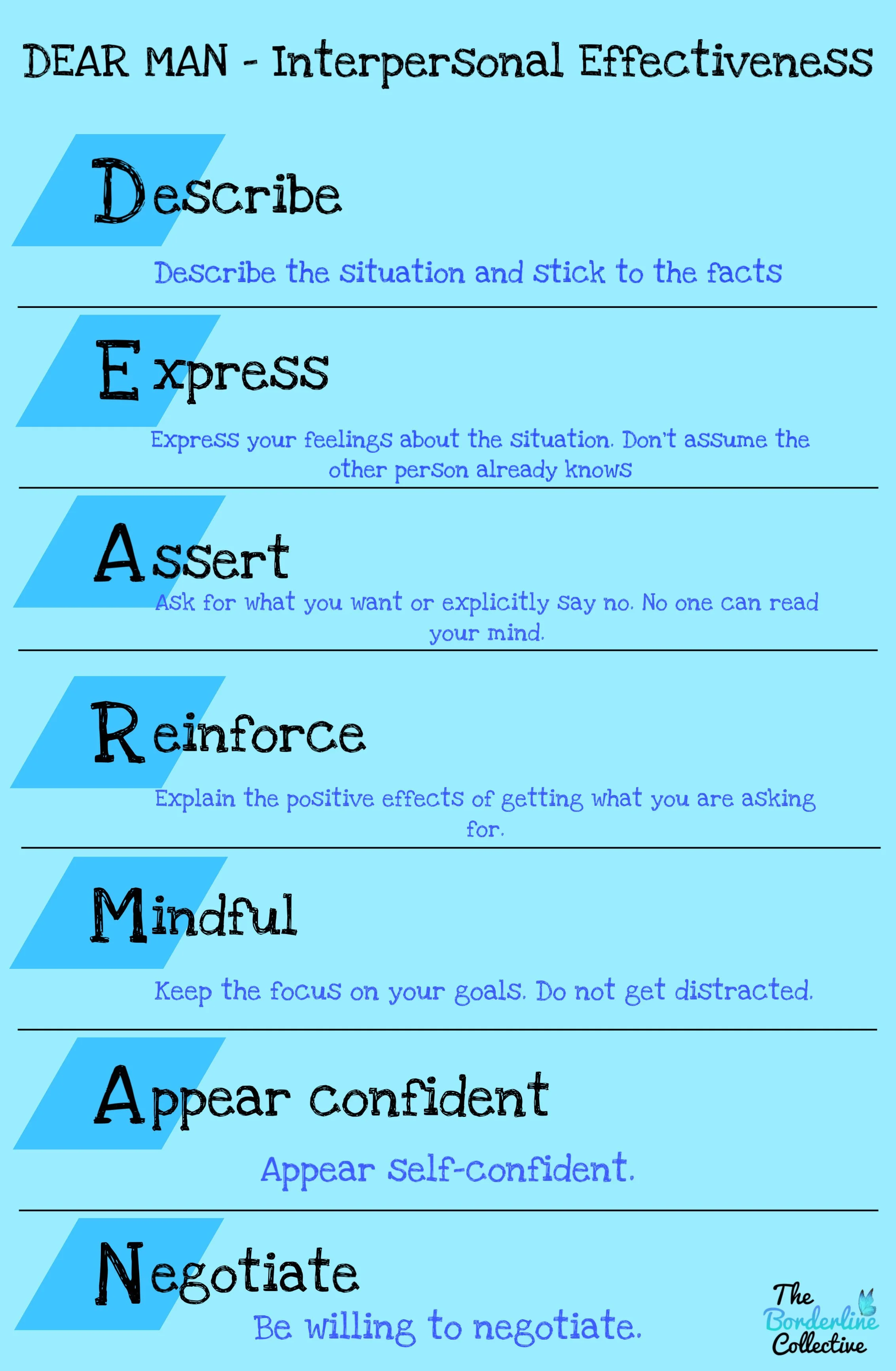

Dear man is a step-by-step skill for asking for something or setting a boundary using assertive communication.
GIVE is about building and maintaining positive connections. It’s especially helpful when you want to keep or improve a relationship (with a friend, partner or family member).

Final Note
Learning DBT skills takes time and practice, no one gets it right straight away. These tools are here to help you cope with intense emotions, build healthier relationships and feel more balanced day by day.
Remember: you don’t have to be perfect to make progress, every small step counts.
Disclaimer: these DBT skills are adapted from Dialectical Behaviour Therapy developed by Dr Marsha Linehan. This page is for educational purposes only and is not a substitute for professional advice. Please reach out to a mental health professional for individual support.